Lower Back Aches: A Gentle Movement Plan for Desk Workers
A practical guide to posture changes, movement breaks, and gentle exercises that may ease everyday lower back discomfort, plus signs that need medical care.
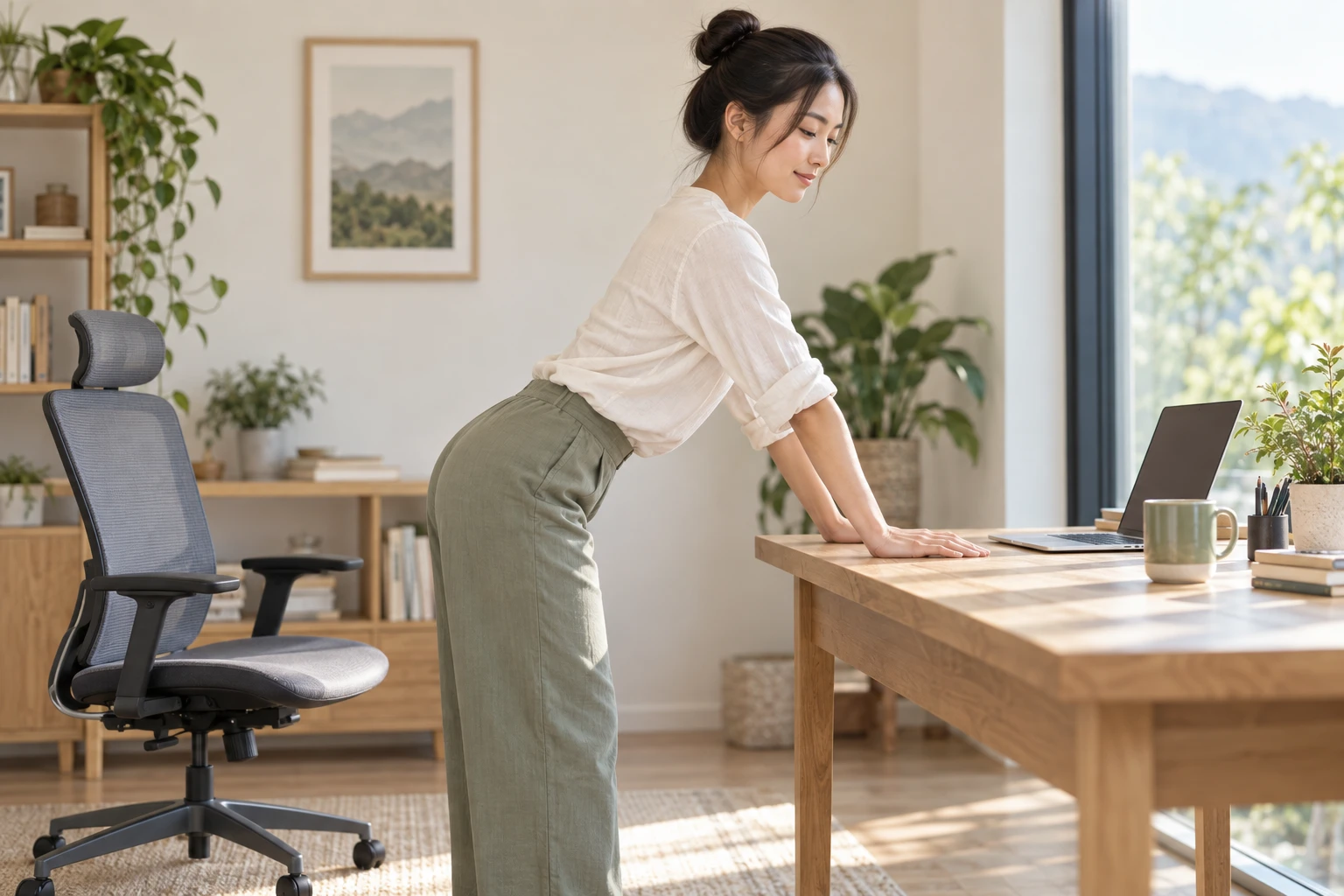
Lower back stiffness or aching after a long day of sitting is common. It may feel like tension, a dull ache, or discomfort when you stand after holding one position for a long time. Many everyday episodes gradually improve, but the cause is not always simply ‘bad posture.’ Activity levels, sleep, stress, workload, and overall health can all influence how pain is experienced.
The aim of self-care is not to force your spine into one ‘perfect’ position. It is to reduce prolonged stillness, change positions regularly, and remain active within a tolerable range. This guide is intended for mild, everyday discomfort and does not replace medical assessment when symptoms are unusual or concerning.
Why can prolonged sitting make the lower back uncomfortable?
The spine is designed to move. When one position is held for too long, the muscles around the hips, trunk, and back maintain a static load, and stiffness or fatigue may increase. This does not mean that one particular posture always causes damage. The best posture is often the next one: moving between supported sitting, comfortably upright sitting, standing, and brief walks allows the body to distribute load in different ways.
Lower back pain may also follow a muscle strain, lifting, a sudden increase in activity, or another cause. A slipped disc cannot be diagnosed from the location of pain alone. If symptoms persist, travel into a leg, or interfere with daily life, a professional assessment can help determine the appropriate next step.
Three principles for safer improvement
1. Stay active within a manageable range
Prolonged bed rest can increase stiffness and make returning to movement more difficult. When there are no warning signs, continue ordinary activities at a suitable level, divide tasks into smaller parts, and build up gradually. Several short walks during the day may be more manageable than one long exercise session.
2. Change position before discomfort builds
There is no single timing rule for everyone. You might begin by standing or walking after every 30 to 45 minutes of sitting, then adjust according to your response. A quiet phone reminder or a habit of standing after each call can make movement breaks easier to maintain.
3. Use pain as a cue to adjust, not a challenge to overcome
Gentle movement may produce mild tension or temporary discomfort, but it should not cause sharp pain, rapidly increasing pain, or symptoms that spread farther down a leg. Reduce the range, perform fewer repetitions, or choose a different movement if your body does not respond well. Stop and seek advice if numbness, weakness, or loss of movement control develops.
A five-minute movement plan beside your desk
Move slowly, breathe naturally, and use a stable desk or chair for support. This is general movement guidance, not treatment for a specific diagnosis.
- Walk in place for 60 seconds: step gently, relax your shoulders, and allow your arms to move naturally.
- Sit to stand 5 to 8 times: keep your feet supported, send your hips back, and use the armrests if needed. Lower only as far as feels comfortable.
- Gentle standing pelvic tilts 6 to 8 times: stand with your back against a wall, gently flatten and release the lower back without holding your breath or bracing hard.
- Supported hip hinge 5 times: place both hands on the desk, send your hips backward while keeping a long spine and your head aligned with your body, then return to standing.
- Easy walk for 60 seconds: notice whether stiffness has decreased, stayed the same, or increased, and adapt the next session.
Stop a movement if pain travels into the buttock or leg, numbness or weakness appears, or pain becomes clearly worse and remains elevated. People who recently had surgery, are pregnant, have osteoporosis, sustained a recent injury, or live with a condition affecting movement should seek individualized guidance.
Adjust your workspace without chasing perfect posture
- Keep both feet supported; use a footrest if the chair is too high.
- Position the screen so you can view it comfortably without repeatedly bending or reaching forward.
- Keep the keyboard and mouse close enough that your shoulders and elbows do not have to reach.
- Change the chair recline and your sitting position during the day instead of holding one rigid pose.
- Keep frequently used items within reach; when reaching low, turn the whole body and use your legs instead of twisting suddenly.
An expensive chair cannot replace movement. Treat workstation setup as a way to reduce unnecessary strain, while regular position changes and activity provide the longer-term foundation.
Heat, rest, and everyday routines
Comfortable warmth for a short period may help some people relax muscles and ease stiffness. Always wrap a heat source in a towel, do not fall asleep while using it, and avoid heat over damaged skin or areas with reduced sensation. Ask a pharmacist or doctor before using pain medicine if you are unsure whether it is suitable, especially if you have a stomach, kidney, or cardiovascular condition, are pregnant, or take other medication.
Sleep and stress can also affect the experience of pain. There is no required sleeping position for everyone. Choose a position that feels comfortable, use pillows for support if helpful, and aim for a consistent sleep routine.
When should you seek prompt or emergency care?
Seek timely medical advice if severe pain begins suddenly or worsens quickly; you also have fever or feel generally unwell; pain follows a significant accident; it does not improve after a few weeks; it disrupts daily activities; it is worse at night; or you experience unexplained weight loss.
Go to an emergency service immediately if back pain occurs with pain, weakness, or numbness in both legs; loss of feeling around the genitals or anus; difficulty urinating, inability to urinate, or loss of bladder or bowel control; chest pain; or onset after a serious accident. Do not try to manage these warning signs with exercise or massage.
Begin with one repeatable change
For the first week, choose one manageable goal: stand after each meeting, walk for five minutes after lunch, or complete the gentle movement sequence once or twice a day. Track your ability to work, walk, and sleep instead of focusing only on a pain score. If function gradually improves without worsening symptoms, that may be a useful sign to keep building activity slowly.
References
This content is for general reference only and does not replace medical diagnosis or treatment.
 01
01
 02
02
 03
03
